
IMPORTANT UPDATE
June Update
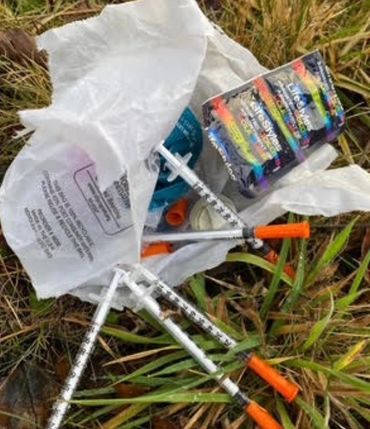
See update below for info on mowing, security problems, possible sales activity. (The photo is of former #6 from Eaglemont Drive, taken June 8, 2026)
Would a good neighbor allow this on their property?
.jpeg/:/rs=w:370,cg:true,m)
Update on Effort to Restore Eaglemont Golf Course
June 8, 2026
Dear Eaglemont Supporters:
Mowing
It’s now June and the Eaglemont community, as well as the increasing number of visitors from outside the community using (or abusing) the property, are noticing the grass is again well beyond what the City of Mount Vernon says their laws will allow. Eric Christensen, the representative from Romano Capital, Eaglemont golf course’s owner, has told those who have asked that the company is working with the City code enforcement officer and will be complying some time in the next month. They also confirmed that the City is not requiring them to remove the cut grass. This means that once again, we will have to be vigilant as fire season returns. There have been three human-caused fires set in the five years since the course fell into its decrepit state, and the dead grass, given the quantity to be cut, represents a significant risk.
In the past, several have requested that Romano provide mowers for the homeowners to volunteer to use to keep at least some of the tall grass down. Some homeowners on the former #12 and #13 have used their own mowers for this purpose. Romano in the past has refused the request presented by the HOA, but there is an indication that they may be more willing to consider it now. It certainly would improve safety and appearance, and would significantly reduce their mowing costs.
Security
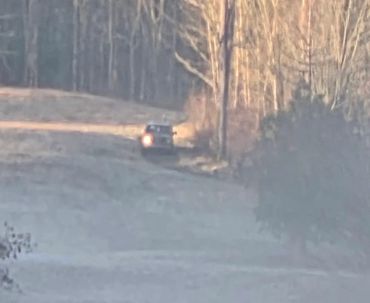
Speaking of risk, since our last communication which focused on security concerns, we have continued to see what seems to be ever-expanding troublesome activity on the course. The police retirees in our community believe that unless the activity is stopped, it will only escalate. A number of photos have been taken of motorbikes, both electric and gas, speeding on the cart paths and causing damage on the course. We are very grateful that the Mount Vernon City police have made a much stronger effort to patrol the course, including the use of motorcycle officers traveling the cart paths and patrolling the course itself. They are also using drones to help locate damaging visitors. There has also been a significant increase in people outside of the immediate Eaglemont community walking on the property as if it were a public park. There are also too many dog walkers who are not respecting the requirements to keep their dogs on a leash and pick up after them. The permit provided to the owner of the golf course property required that public walking and biking trails be maintained, and there are designated trails on the plan that are not being maintained. This makes it difficult for the owner to attempt to enforce the existing no trespassing signs.
This leaves the situation in the hands of those on the property to help enforce the laws and protect our homes. The HOA has encouraged installing lights facing the course and some homeowners have installed cameras. The police have requested that we call 911 whenever a motorbike is on the course property and especially if off the cart paths. Again, we are grateful that we have seen quick response and some observed a motorcycle officer pursuing a young biker speeding down the path on the former hole #12. Gentle reminders to dog owners who are not respecting the property, hopefully, will help encourage more responsible behavior. Romano has responded to the security problems by encouraging the HOA to remind homeowners to call the police. An HOA Security Committee is at work to help address this, and we will let you know if and when a security plan is announced. In the meantime, see something? Say something.
Sales activity
There has been some indication that Romano is doing something to sell the property. A property valuation expert talked to a few homeowners and explained that he was working to provide the owners with a valuation. He was with a major commercial real estate company. Romano also communicated that they are entertaining one offer, but if that is not accepted, they will list the property in a month. While we hope that is the case, we note that it was last summer when the HOA was told it was just about to be listed.
Restoration efforts
A meeting was held in late April with several homeowners who expressed interest in supporting the restoration efforts. This is encouraging as those who have been involved for the past years are eager for new leadership. Bob Peterson, a relatively new homeowner, has been actively engaged in going to City Council meetings, talking with City Council members and City officials, and getting up to speed on the efforts that have been made to date. He also reached out to Eric Christensen to learn more about their plans and activities regarding Eaglemont. As he has the most current and relevant information, you are encouraged to contact him if you have any questions, comments, or interest in assisting the efforts to restore our golf course, clubhouse and community.
Bob can be reached at badbobwa@yahoo.com.
April 8, 2026
Dear Eaglemont Supporters:
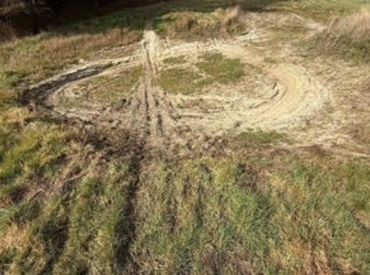
Recently, photos have been circulating that show the increasing security issues our community faces. There are also continuing reports from within our community about cars recklessly spinning on our streets, bicyclists and four-wheelers riding across the rain-soaked fairways leaving deep gouges, dogs running loose, vehicles driving down the cart paths, etc. One homeowner has seen a group of young men in black hoodies and backpacks walking down the cart path at midnight. There have been three fires that we know of set or caused by individuals on the course property who had no business being there. Given the lack of mowing by the property owner until the City forces action, this represents a high risk to all of us as we head back into the summer season.
Most of us purchased our homes here because this was a golf community, with the understanding that within a golf community, we wouldn’t have to worry about coming across a discarded bag of injection needles, nor tires thrown on the paths, nor worry about being run down by a group of kids on bikes or trucks coming down the cart paths. But, it is not a golf course, and is owned by an investment group controlled by an out-of-town corporation who has consistently shown little to no concern for the impact of their decisions on their neighbors.
The Eaglemont HOA at the annual meeting in March announced that the Board was forming a Security Committee. This is being headed by Stephen Niver, who was elected to the Board at that meeting. The Security Committee is investigating possible solutions, which will be presented to the Board for approval.
Solutions to this serious problem will likely not be inexpensive. The property owner has repeatedly expressed that it is their intention to be a good neighbor, yet has refused to meet with concerned homeowners and expressed frustration when complaints about what is happening are lodged. Instead of taking steps to avoid these problems, they are exposing their neighbors to significant security concerns. If you lived next door to a neighbor who allowed drug users to camp out and leave their needles behind, leave the grass to grow until the City fines start, or do nothing as bikes, cars, and trucks drive around spinning donuts, would you consider that being a good neighbor? The cost of securing this community should not be borne by the HOA members. If this were still a golf course, would this be happening?
We discussed this situation with City officials and we have provided the photos included with this message. When neighbors cause security problems for their neighbors, the City can fine the offending neighbor. We will continue to pursue this and will inform you of any action the City takes. If the City does not take action, we will also let you know and advise on how you can assist in getting appropriate attention to this problem.
Regarding the future of the property, Kent Haberly and Gerald Baron have had some productive meetings with City officials. The major obstacle to selling the property for restoring the course is the Waugh Road extension. Further development of the property is limited in the original Master Plan until the road is built that connects Waugh Road to Blackburn Road. But because of terrain and wetlands, the cost of that is now estimated at $20 million. Without being able to develop some of the course property, it is unlikely to find a developer who will restore the course. If enough property can be developed without unduly disturbing the course layout, it becomes more feasible to sell to someone who can fund the restoration and make a return on the development potential. Early discussions indicate that there may be flexibility in allowing for sufficient development to make it feasible, but we are far from determining that. The fact that the Master Plan has expired and the City is in a 20-year planning and traffic update study may make this more feasible.
We are always interested in hearing your interest, questions, or comments. Address to Gerald Baron at gerald.baron@agincourt.us or Kent Haberly at kgbv.haberly@gmail.com.
Eaglemont Restoration Committee
Kent and Gretchen Haberly
Gerald and Lynne Baron
Jerry and Peggy Anderson
Karl and Louise Kirchgasler
February 7, 2026 Update
Dear Eaglemont Supporters:
We are now coming up on six years since Eaglemont was closed and five years since it was sold to a fraudster funded by Romano Capital. Who would have thought that in 2026 we would be sitting with a dead golf course, and with little progress toward a solution?
We are not giving up.
While we have been waiting quietly for several months, this does not mean that the Restoration Committee has given up on restoring the course and clubhouse. But we do face some daunting challenges.
The first is with Romano itself. Kent Haberly and Gerald Baron last spoke with Eric Christensen, our point of contact at Romano, last August. At that time, we were told they were very close to signing with a golf course listing agency. That was encouraging as we felt we would have someone with whom to discuss ideas and options, and get a reading on where they thought the property was headed. We also made it clear we were eager and willing to meet with Eric at any time and would travel to their office in Vancouver, WA to do so. Now, six months later, no listing agent is in sight, and Eric and a real estate development person met with the City a few weeks ago. There was again no effort to meet with us while they were in town and looking over the property.
The biggest problem: the Waugh Road extension
As most of you know, when the plan was approved some 35 years ago, there was a limit placed on the number of housing units that could be developed before building out Waugh Road to Blackburn, providing a second entry and exit, and an easy path to the freeway. That limit has essentially been reached with only the 18 lots west of the clubhouse going up the hill allowed, along with about 20 units just east of the clubhouse where the weddings were held.
The most reasonable opportunity for a developer or investor to restore the course is if they can generate funds through the sale of property, specifically for housing. With very little development property included with the golf course, adjacent property or properties would be needed to generate enough sales. There are three adjacent or nearby properties that are possible for new residential units. The closest property is the nearly 300 acres that are part of the original master plan. About 450 home sites were identified as part of that plan, which also included another nine holes added to the golf course. If this property could be purchased at a reasonable price, then it would be feasible for that developer to put in the Waugh Road extension.
There are two big problems with that. One is that the cost of putting in that road, estimated originally in the mid-1990s to be $2.5 million, is now estimated to be about $20 million. It has a steep slope with numerous wetlands, making it very challenging. Even if the property could be purchased at a reasonable price, the very high cost of that road would limit the profitability. But, the other problem is, P.S. Lee, one of the original developers and owner of the property, has made it clear he has no intention of selling it.
In short, the Waugh Road extension appears to be the major hindrance to selling the property to a developer who would restore the course and clubhouse.
What are the options?
Eric Christensen, in our conversation and in later emails, said that Romano is considering selling the clubhouse and the small piece of developable property to the east of the clubhouse separately from the 18 holes. It is possible, he said, that they could make their investors whole by taking this approach. He was asked then if they would consider essentially giving away the 18 holes, and he said yes. But, given the continuing and worsening deterioration, who would be willing to invest in restoring the course and the equipment needed for full operation without the offsetting potential of the clubhouse and development property?
Options that some have suggested include restoring the back nine holes around the homes, and allowing the front nine to be used for other purposes, including residential. Others have suggested reconfiguring the course, especially along the south side of Eaglemont Drive, to accommodate a number of residential lots. This could be a relatively minor reconfiguration, allowing for a small number of lots, or a major reconfiguration into an executive course with a larger number of lots.
The nine-hole option suffers from the difficulty of making it profitable with just nine holes, as it would be less likely to draw serious golfers from around the region. The other options suffer from the Waugh Road extension problem. If no additional residential units are allowed, then those are off the table. There is also the question of the cost of restoration and reconfiguration against the potential gain from the sale of the residential units. A big uncertainty.
To explore the feasibility of allowing for a limited number of new residential units, Kent and Gerald recently met with Steve Sexton, assistant to Mayor Donovan and Interim Planning Director. We pointed out that an additional entry/exit not anticipated in the original plan has already been put in place with Alpine View Drive through Montreaux. That is limited, of course, but we pointed out a couple of other options for entry and exits that would likely cost considerably less than the Waugh Road option. There is also the current comprehensive plan update that is underway, which includes updating the transportation and traffic study, which may provide some additional flexibility and considerations around the Waugh Road extension. At this point, we don’t know if such flexibility is a possibility, and even if it is, we don’t know if the degree of flexibility would be sufficient to provide the funds for restoration. As the flexibility is an important point, we will continue to follow up on this issue and inform you of any developments.
An additional option is the formation of a Parks and Recreation District. This is the direction the City has pointed to all along. This is an option for Romano to pursue as well as a group from the community. Similar to what residents in Anacortes did to create the community pool, it would involve drawing lines around the area that would be subject to bearing the costs associated with restoring and operating the course and property. That could be minimal if the clubhouse and development property were sold, and even more so if there was more flexibility in allowing for more residential units. But, securing voter approval with the likelihood of any increase in taxes at all, appears unlikely at best in the current high tax environment we have entered in this state.
One option that is not on the table is for the City to allow the property to be left in natural condition. City code requiring mowing will continue to be enforced, we are told. Another option off the table is residential development of the golf course without homeowner approval. We are quite certain that Romano does understand that. While the judge proved very disappointing, we still have the judgment that said the homeowners can enforce the equitable servitude established, which means we have the legal right to insist that it remain a golf course. We have kept open in the case we filed the options for property damages and an injunction to require a property owner to restore and operate the course.
Of course, one option is the status quo. Many in our community are enjoying the walking trails and making use of them as if this was a public park––a dog park even. The ugliness of a once-beautiful course and clubhouse have to be ignored on these walks. But, to continue that indefinitely, Romano would have to be willing to invest over $200,000 per year for the community to continue to enjoy this “amenity.”
Where do we go from here?
We believe that Romano is eager to sell the property, but that their mantra of “making their investors whole” has prevented any progress toward that end. Given annual expenses we estimate to be over $200,000 per year, we believe that at some point they may realize their “win-win” is not possible and sell the property at a loss. Given the pending changes to the comprehensive plan, it would be wise for them to be more strongly engaged with the City in identifying opportunities for the flexibility that would enhance the value of the property. Should the changed conditions of the current additional access point, with additional access points available, allow for additional development, it is more likely that Romano could find a buyer that would have the ability to restore the course, or, as they are a development company themselves, they could decide it was in their best interests to do that. Another is the possibility of securing the 18 holes without the clubhouse and development property, then working with developers or local investors to develop what would be allowed and restore the course. Some have suggested that a public/private course is the best option, and this could be explored if that direction became feasible.
We have been in conversation with John Steidel, the original golf course architect, who has expressed continuing interest in Eaglemont’s restoration. He may be able to help us as we consider some of the options outlined here.
Given the continuing interest expressed by several homeowners, the Restoration Committee needs to be expanded into a kind of executive committee. We will ask some of you who have contacted us to join this group, but also are welcoming those of you with a strong interest in becoming more actively involved to contact Kent Haberly (kbgv.haberly@gmail.com) or Gerald Baron (gerald.baron@agincourt.us).
We are also planning on requesting a joint meeting with all the property owners near or adjacent to the property who have a financial interest in the restoration. If we can gain some additional flexibility from the City, then it may open the doors somewhat to finally achieving what we have been aiming for now for nearly six years: a return to golf and community living in a beautiful golf course community.
The Eaglemont Restoration Committee
Gerald & Lynne Baron
Kent & Gretchen Haberly
Jerry & Peggy Anderson
Karl & Louise Kirchgasler
August 22, 2025 Update
Dear Eaglemont Supporters:
The grass once again grows long on most of the fairways. The lack of irrigation has turned everything brown. The once beautiful clubhouse sits forlornly, encased in prison-like fencing, slowly aging. The community is asking: Is anything happening? Is there any hope for a return to golf and a community gathering place?
We can’t provide a positive answer to that, but we can update you on conversations with Eric Christensen from Romano.
Homeowner mowing
HOA president Darlene Andris has had conversations with Eric about the possibility of Romano providing a mower for homeowners to volunteer and mow fairways near their houses. Eric said that was something they had considered but had not moved forward on. He said they are reconsidering and will let Darlene know their decision. It certainly would seem to be to their advantage. It would reduce mowing cost, lower fire danger, and help those facing the golf course feel a little bit better about the condition they have to look at every day.
Sales agency listing
We’ve reported in the past that Romano has said they will list the property with a golf course sales agency. To date that has not happened. Kent and Gerald had a zoom call with Eric on Monday, August 18, and he assured us that the property would be listed by the end of August. We certainly hope that is the case.
Sales prospects
Romano’s intention, as conveyed by Eric, has always been to sell the property as a golf course, including the clubhouse and the limited amount of development property. At least that has been their intention since determining that developing it for other purposes, such as homes, was not feasible. He reassured us that they have not been sitting still but have been actively seeking potential buyers, as well as looking into the possibility of developing it themselves. That option is off the table because Mr. P.S. Lee has made it clear he has no desire or intention to sell the property that includes over 400 home sites as part of the master plan. The most feasible option for a developer would include that property, given the challenges of running the course profitably and the cost of the required Waugh Road extension. Without that option, the upside for potential buyers is much more limited. While a qualified golf course sales agency may be able to market it more aggressively, Romano is not overly optimistic that they will find buyers for the whole package.
Three-parcel consideration
Eric made it clear their first choice is to sell the property whole. But, given the difficulties, they are becoming open to the possibility of treating the property as three separate parcels. One would be the clubhouse, two would be the area just east of the clubhouse that is designated for hotel or townhome units, and three would be the 18-hole golf course. It is possible that selling the clubhouse and development property could make their investors whole, which is clearly their top priority. He assured us that if they did that, they would not sell those properties for uses incompatible with the golf course operation. If investors could be made whole by selling those, that leaves the golf course, which is by far the most difficult parcel, that could be sold or leased for little to no money. That may make it interesting to a golf course operator or even a private investment group to take it over, invest in the restoration, and operate it. This could be aided by a low-cost lease on the existing pro shop, which Eric mentioned. It may even be possible, we suggested, that proceeds from the sale of the other parcels could assist with restoration, making this option more feasible.
Waugh Road
The combination of P.S. Lee’s lack of cooperation with this process in asking an outrageous $20 million for the development property, and the requirement of the City that no further development beyond 21 new housing units will be allowed without the Waugh Road extension, makes selling the course as a whole exceedingly difficult. Our HOA leadership, led by Darlene Andris, has met with the City about the Waugh Road extension and reports discouraging news. The City’s study shows that the incline of the road would be impossible for fire trucks as originally planned, so a new route would be necessary. The estimated cost for the road extension is now $20 million. This seems an impossible sum, effectively locking up hundreds of acres of potential development land at a time when the City is placing a high priority on additional housing, especially affordable housing.
Creative solutions
If there was a theme to our friendly and positive conversation with Eric, it was that Romano is very open to creative solutions. They certainly are looking for a win-win, and Eric reports they have invested $300,000 to $400,000 in making repairs in the clubhouse. The Lee/Waugh Road problem looks intractable, but are there other options for access to the properties that would make at least some additional development more feasible? Is one of those through Burlingame? What about out to Mountain View Road? Would the community support these options, and most importantly, would the City and traffic laws permit it? We know that other property owners with adjacent properties have an interest in and are willing to work on potential solutions. Given the flexibility we sense from Romano, would reconfiguring some holes on the front nine allow for a better solution to road access and possibly open up significantly more development land on the course? We briefly discussed the nine-hole option, but the most feasible area for development is on the back nine where the homeowners would not want to see it. The front nine presents significant problems for development, so that option does not look very viable. The possibility of the golf course being available at little or no cost, or even supplemented by Romano, could open the door for a golf course operator, a local investment group, or even a public/private course with equity membership that allows public play.
Where next?
The fact that Romano is talking with us and expressing flexibility and openness to creative solutions is a positive step forward. They understand now, we believe, that HOA participation in this is simply impossible given the by-laws and the requirement of a ⅔ vote to make any changes. Now is the time for creative solutions. If any of you have ideas or are interested in exploring options, please let Kent or Gerald know.
The Eaglemont Restoration Committee
Contacts:
Kent Haberly kbgv.haberly@gmail.com, 360-202-0277
Gerald Baron gerald.baron@agincourt.us, 360-303-9123
Kent and Gretchen Haberly
Gerald and Lynne Baron
Jerry and Peggy Anderson
Karl and Louise Kirchgasler
Let us know you are interested!
Restore Eaglemont Golf Course
This website uses cookies.
We use cookies to analyze website traffic and optimize your website experience. By accepting our use of cookies, your data will be aggregated with all other user data.